
Field test • LensARTed
SIGMA 28–105mm F2.8 DG DN | Art
Practical review
A short summary based on real-world use: portrait / reportage / everyday photography / outdoor shooting. No lab charts – only practical observations from actual use.
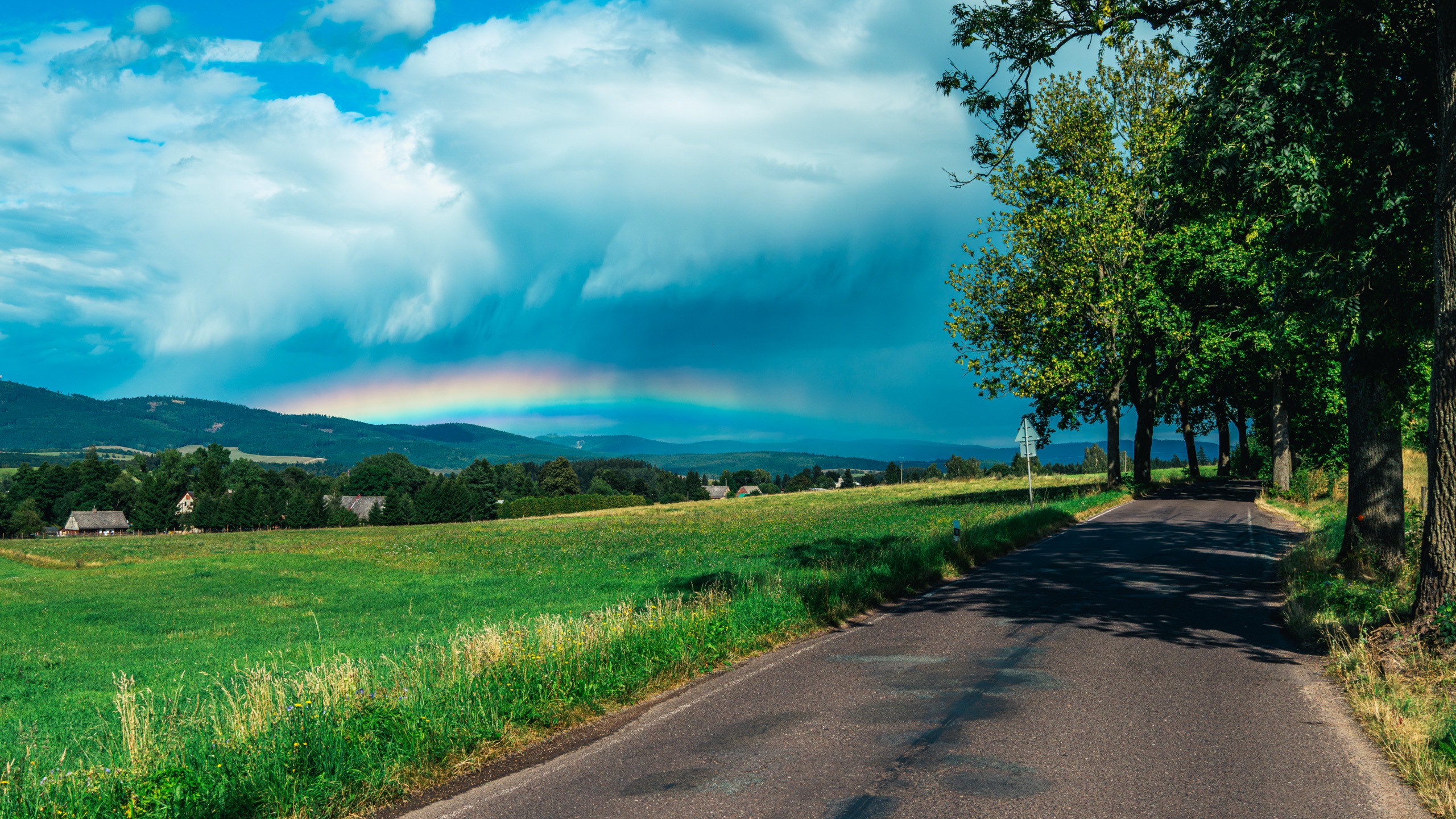
33 mm | 1/1250 | F11 | ISO500 | The lens in action — colour, contrast and tonal gradations in natural light after a storm.
Why the Sigma 28–105 mm
The 28–105 mm range is one of the most practical focal ranges for real everyday use – in practice this means:
- 28 mm works very well for reportage, travel, everyday photography and wider frames in tighter spaces,
- 35–50 mm gives a natural perspective for documentary work and spontaneous scenes,
- 85–105 mm is a very useful range for portraits, details and calmer image compression,
- the constant f/2.8 aperture makes this lens clearly more versatile than typical travel zooms.
Main strengths
Wide end – 28 mm: wide enough for reportage, everyday scenes and urban photography, without overly aggressive perspective.
In practice:
- good readability across the whole frame,
- natural proportions when photographing people,
- pleasant contrast already wide open,
- useful in tighter spaces and for quick handheld shooting.
Mid range – 50–70 mm: this is where the lens shows a lot of its everyday usefulness.
Images taken in this range stand out for:
- very even sharpness,
- a calm rendering style,
- natural colour reproduction,
- high flexibility for reportage and people photography.
Long end – 85–105 mm: a very useful range for portraits, details and images with stronger background separation.
In real use, the Sigma 28–105 mm offers here:
- good detail rendering,
- smooth bokeh,
- pleasant compression,
- consistently high image quality.
Gear shown in the photos
Two photos showing how the setup looks in real use and how the lens itself is built.
Click the image to enlarge it.
Ergonomics and build quality
The lens was tested with the Sony A7R V and A7 III in typical everyday shooting situations: whilst walking around town, for outdoor portraits, when capturing details, architecture and reportage scenes. It soon becomes clear that this model was not designed solely for its optical performance, but above all as a practical tool for professional use.
Despite its larger size, the lens feels surprisingly well balanced in the hand. It is not a small “leave-it-on-all-day” zoom, but when paired with a full-frame body it creates a setup that feels stable and professional. During longer sessions, balance matters just as much as weight itself – and here Sigma feels mature and well thought out.
The zoom ring operates smoothly, with well-judged resistance. This makes framing precise and comfortable, without the lens feeling too loose or prone to accidental focal length changes. The focus ring also feels nicely damped and offers good tactile feedback.
The additional controls on the lens improve usability in practice. Physical switches and direct access to key functions support faster work in the field – especially when you do not want to lose time going through camera menus.
The material quality is very good. The lens feels solid, refined and clearly built for regular use, yet without becoming unnecessarily bulky. It gives the impression of a serious photographic tool, not just a product designed to look impressive on paper.
What matters most here is that, despite its versatility, the lens does not feel like a fragile compromise. It is substantial enough for serious work, but still portable enough that you genuinely want to take it with you. And in real-world use, that is often what decides whether a lens is truly practical or not.
Image quality in practice
The Sigma 28–105 mm F2.8 DG DN | Art stands out mainly because of its consistency. This is not a lens that shines only at one favourite focal length – instead, it delivers a mature, stable and predictable image across the whole range. That is exactly what makes it so valuable in real use.
At 28 mm, even wide open, the lens produces a clear, contrasty image with a good amount of detail. This focal length works very well for reportage, everyday urban photography and situations where you deliberately want to include more of the surroundings. The perspective remains wide, but not exaggerated, so the image still feels natural.
In the middle range, between 50 and 70 mm, the lens delivers a particularly harmonious rendering. Sharpness, contrast and colour all come together in a very balanced way. The images look clean and modern, yet without becoming overly clinical. This is a very strong range for documentary work, portraits and everyday scenes.
At 85–105 mm, the lens clearly shows its portrait potential. Perspective becomes calmer, backgrounds are easier to organise, and subject separation looks natural. Especially at f/2.8, the rendering is very usable – not exaggerated, but aesthetic and professional.
Another major strength in everyday use is predictability. The lens does not surprise you with noticeable drops in quality between focal lengths, but instead delivers a stable result throughout the zoom range. When working quickly and reacting to changing situations, that is a very important advantage.
Photo gallery (click to enlarge)
When positioned correctly in relation to the scene, the lens maintains a stable frame composition. Architectural lines remain natural, and the wide angle does not cause excessive distortion.
A longer focal length allows for striking perspective compression and the isolation of architectural details. Even at f/4, the lens produces an image with high micro-contrast and excellent sharpness across the entire frame.
The maximum focal length, combined with shooting in harsh light, puts the anti-reflective coatings to the test. The lens maintains contrast superbly, rendering the edges of the harbour cranes with precision against the backdrop of a dynamic sky.
This lens is ideal for close-up photography. Stopping down to f/11 brought out the texture of the hat whilst maintaining a soft, natural background blur (bokeh).
At f/4, the lens produces a very soft out-of-focus transition, which effectively separates the main subject from the forest background. The image quality is reminiscent of bright prime lenses.
Shooting against the light does not adversely affect the image contrast. Stopping down to f/9 brings out the texture of the mushroom gills whilst retaining the soft, round highlights in the background.
A focal length of around 40–45 mm offers the most natural representation of proportions. The sensor’s high resolution, combined with the lens’s sharpness, allows for flexible framing without losing any architectural detail.
Fast and precise autofocus allows you to capture dynamic scenes in an instant. The short exposure time perfectly froze the movement of the water, whilst keeping the texture of the rocks in the background in sharp focus.
Using a longer focal length at f/3.5 allows for a subtle separation of the island from the sea horizon. The lens easily captures the finest details, such as the texture of the rocks or the white sails billowing in the wind.
Who is this lens for?
- Reportage and event photography – a broad practical range without constant lens changes.
- Portrait photography – especially when it matters to move quickly from wider framing to tighter details.
- Everyday and travel photography at a higher level – with more creative potential than a typical travel zoom.
- Wedding photography – as a versatile tool for preparations, reportage and portraits in one lens.
- Photographers looking for a serious alternative to a 24–70 mm and who genuinely want to make use of the extra reach to 105 mm.
- Those looking for the perfect solution / People who want to minimize lens swapping, without losing the f/2.8 aperture
Weaknesses worth mentioning
- 28 mm is versatile, but not as wide as 24 mm – in tight interiors or architecture work, that may matter.
- This is not a lightweight lens – understandable for an f/2.8 zoom with this range, but noticeable in daily use.
- Those looking for maximum compactness will probably prefer smaller zooms or prime lenses.
- It is a high-end general-purpose lens, but it will not replace a very fast prime in every specialised situation.
Summary
The Sigma 28–105 mm F2.8 DG DN | Art is a lens whose strength does not come from one spectacular specification, but from the overall maturity of the design in real-world use. It combines a very practical focal range with a constant f/2.8 aperture and image quality that remains convincing throughout the zoom range.
In practice, this means fewer lens changes, greater flexibility and a very high level of usefulness for photographers who do not work in only one genre. From everyday urban frames to reportage and portrait work, this lens covers a genuinely wide range of applications without feeling like a random compromise.
One of its biggest strengths is that it does not feel like a zoom that only looks good on paper because of its focal range. The image it delivers is mature, clean and predictable – exactly what you want from a serious working tool. The extension to 105 mm gives more in practice than it might seem at first glance.
The tested lens fits perfectly not only with the demanding 61 Mpix sensor in the A7R V, but also works seamlessly with the older A7 III body. Even at 24 Mpix, the image remains sharp, maintaining its characteristic, modern look. This is proof that Sigma designed this model with a wide range of users and different generations of Sony equipment in mind.
Of course, it is neither the smallest nor the lightest solution, and 28 mm will not replace 24 mm in every situation. Even so, the final balance is very strong: this is a lens capable of covering many photographic tasks at a high level, while still keeping the character of a versatile zoom with professional ambitions.